Benjamin Franklin Single Responder
Email in, one voice out. A subscriber sends a question to a dedicated address; minutes later they get a considered reply from Benjamin Franklin: printer, scientist, diplomat, and the most quotable pragmatist of the eighteenth century. No committee, no hand-off, no one sitting at an inbox making it happen.
It is the same Looptah Connect responder that powers the Gnews Gnugget Team Responder, with one persona behind it instead of a panel. That's the point: the plumbing doesn't change when the org chart does. One expert or a whole roster, same stack.
Confidence is provisional. Verification is mandatory.
What it does
One channel in, one channel out: email. Everything in between is handled for you.
Reads the mailbox
Every message that lands at Franklin's address is picked up automatically the moment it arrives, then parsed, decoded, and cleaned into plain text ready to work with.
Decides what to do
It checks who sent it, how long it is, and whether it's safe to act on, then routes accordingly. Valid questions go to the persona; everything else gets a helpful, on-brand response or is quietly ignored.
Answers in one voice
Franklin gives a single, direct answer, with no labelled turns and no debate to read through, and the responder emails it back with the original message quoted below, exactly like a real reply.
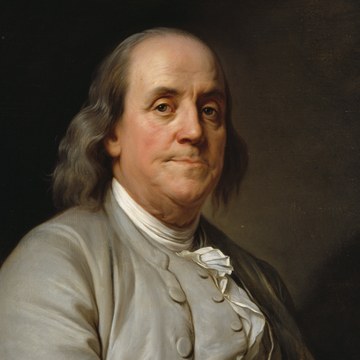
Benjamin Franklin
Printer, postmaster, scientist, diplomat, and a man who spent his life explaining complicated things to people who hadn't the time for them. Plain-spoken, wry, allergic to dogma, and constitutionally incapable of a long answer when a short one will do. He is the pragmatist: less interested in what we ought to feel than in what is to be done.
Reading about a persona is one thing. Listening to one hold up its end of a conversation is another. Franklin sat for a full interview on Talking to the Machine, with the same persona this responder writes with, in audio.
Franklin is a show persona from Talking to the Machine, but the responder behind him is the business article. Point it at any persona you like: the one your customers should hear from, in the voice your organization actually uses.
One expert, or a room full of them.
Looptah Connect responders come in two shapes, and the difference is not technical. It's editorial. A single responder gives an answer. A team responder gives you the argument that produced it. Pick by what the reader needs.
| Single Responder | Team Responder | |
|---|---|---|
| Example | Benjamin Franklin (this page) | Gnorm & Seamus |
| The reply | One unlabelled answer, signed by the persona. | Labelled turns: each persona reacts and answers in sequence. |
| Best for | Expert desks, FAQ and support lines, intake, anywhere a clear answer beats a discussion. | Second opinions, red-teaming, editorial and entertainment, anywhere disagreement is the value. |
| Cost & latency | One model call per message, the cheaper and faster of the two. | One call per persona per round; richer output, proportionally more of both. |
| Under the hood | Identical. Same parsing, same allowlist, same anti-spoof and loop guards, same rate limits, same packaging. A single deployment variable decides which one you get. | |
They run side by side quite happily. Each responder gets its own mailbox, its own rate allowance, and its own failure log, so a busy support line never eats into the expert desk's budget, or its reputation.
How it works
The whole thing is event-driven and serverless. Nothing runs until an email arrives. This example is built on AWS, and the pattern maps cleanly onto any major cloud.
Mail arrives at SES
Amazon SES receives email for Franklin's address and writes the raw message straight to its own prefix in the S3 bucket. No inbox to poll, no mail server to run.
S3 triggers the function
The new object fires an S3 event that invokes this responder's own Lambda function, routed by prefix, so the team responder never sees the message. Compute spins up on demand, only for this email.
The function reads & screens
Lambda parses the MIME email, extracts clean text, and runs the guardrails: sender allowlist, length limits, attachment and anti-spoof checks, and per-sender throttling backed by its own DynamoDB table.
Franklin responds
Cleared messages become a task the persona engine runs with a single speaker, with no panel, no hand-off, and a tighter length guardrail than the team version, using the model of your choice, with the API key held in a managed secrets store, never in code.
The reply goes out
The responder composes the answer in Franklin's voice, signs it, quotes the original message below it, and sends it back through SES to the original sender.
It goes back to sleep
When the message is handled, the function exits. Nothing is left running and nothing is billed until the next email lands.
Franklin shares the storage bucket, the model credential, and the dependency layer with the team responder, and nothing else. His function, permissions, logs, dead-letter queue, and rate-limit table are all his own. One responder getting hammered can't slow, silence, or bill the other, and when something fails you know immediately which desk it failed on.
Franklin is the default, not the design.
The single responder doesn't know or care who is answering. The persona is a deployment setting. Point it at a different one and redeploy, and the same mailbox now answers as someone else entirely. Nothing in the parsing, screening, or sending changes.
Swap the voice
Any persona in the library, standard or custom. Franklin today, your head of support tomorrow, without touching a line of the plumbing.
Run several at once
Each additional responder is a new address, a new prefix, and a new function. Different personas, different mailboxes, independent budgets and logs.
Or promote to a team
Decide the question deserves an argument rather than an answer? The team responder is the same stack with more than one speaker configured.
Hosted by Looptah, or built on your infrastructure.
The responder is a small, portable stack of managed services. That means you can hand it to us entirely, or run the exact same design inside your own cloud account, under your own controls.
Hosted by us
We stand it up in Looptah's cloud and operate it. You point a mailbox at it and start getting replies. The fastest way to a working responder, with nothing for you to maintain.
Built on yours
Deployed into your own AWS account from infrastructure-as-code (SES, S3, Lambda, DynamoDB, and Secrets Manager), inside your VPC, under your IAM, against your data-residency and governance policies.
Like the rest of Looptah Connect, the persona engine runs on the AI platform you prefer, whether Gemini, Claude, OpenAI, or a local model when the work can't leave the building. Swap the model without touching the plumbing.
It knows what not to answer.
An open mailbox is an open door. The single responder ships with exactly the same checks as the team version. The guardrails are part of the platform, not the persona.
Sender rules
A defined list decides who gets a persona reply. Everyone else gets a friendly pointer to subscribe, at most once an hour.
Length & format
Messages that are too long, too short, or carry attachments get a clear note asking the sender to adjust and resend.
Anti-spoof
Spam, malware, and failed-authentication mail is dropped before the persona ever sees it, so there is no backscatter and no reputation hit.
Its own throttle
Per-sender rate limits and loop detection, tracked in this responder's own table, so Franklin's allowance is independent of every other desk you run.
Secrets kept secret
Model API keys live in a managed secrets store with least-privilege access, never in the code or the config.
Failure handling
Anything that errors out lands in this responder's own dead-letter queue for review instead of vanishing, attributable to the right desk, and nothing silently lost.
Want one of these on your own mailbox?
The Benjamin Franklin Single Responder is one example of Looptah Connect. Tell us what channel you'd want a persona behind, whether support, sales, intake, an expert desk, or something stranger, and we'll show you what it would take. One voice or a whole panel. Hosted by us, or built on your cloud.